
Stop Overpaying: How To Inspect a Scratch and Dent Appliance Safely Before You Buy
If you shop online, you already know stuff gets banged up in transit, and with about 700 million damaged packages a year in the U.S. worth roughly $48.5 billion, checking a scratch and dent appliance carefully in 2026 is not optional, it is survival for your wallet.
Key Takeaways
| Question | Quick Answer |
| How do I inspect a scratch and dent appliance safely? | Use a simple step-by-step check, look at the outside, test key functions, listen for weird sounds, and confirm warranty and return rules before you pay. |
| What damage is “cosmetic only” and usually safe? | Scratches, small door dings, and scuffs on side panels are often fine if they do not touch hinges, seals, glass, or control boards, stores like Scratch and Dent Superstore often label these clearly. |
| How can I avoid buying someone else’s “problem” appliance? | Check the model number for recalls, ask for a test run, and use guides from sites like Scratch and Dent Finder to know which brands and models to avoid. |
| Can I inspect a scratch and dent appliance I found online? | Yes, use videos, close-up photos, and delivery inspection, and if you shop through tools like Scratch & Dent Stores you can often pick a local store to see items in person. |
| What should I do if the appliance shows up more damaged than described? | Take photos right away, refuse delivery if needed, and use any claim process like the one at Scratch & Dent Stores if the platform offers it. |
| Are warranties useful on scratch and dent units? | Yes, many still qualify, and videos like the ones on Scratch and Dent Finder FAQ explain how extended warranties can help if you are nervous about repairs. |
1. Scratch and Dent 101: What You Are Really Buying In 2026
When you hear “scratch and dent,” we are talking about new or almost-new appliances with cosmetic damage, open-box history, or minor handling dings that do not stop them from working. Our job is to help you separate harmless blemishes from the kind of damage that turns into a safety risk or a repair nightmare.
In 2026, more people are hunting deals this way, and 60% of Americans say they have gotten damaged goods from online orders this year, so you are not alone if you feel cautious. The good news is that with a simple inspection plan, you can grab those deep discounts and still sleep fine at night.
Types of Scratch and Dent Appliances You Will See
Most scratch and dent units fall into a few buckets, each with its own inspection focus. Knowing which type you are looking at tells you where to pay attention.
- Cosmetic only: Factory-fresh inside, with scuffs, dents, or paint chips on the outside.
- Open-box / display: Used for floor demos, often low hours of use but lots of fingerprints and minor wear.
- Freight-damaged: Hit in shipping or at the warehouse, can be perfectly safe or a hard “no,” depending on where the hit landed.
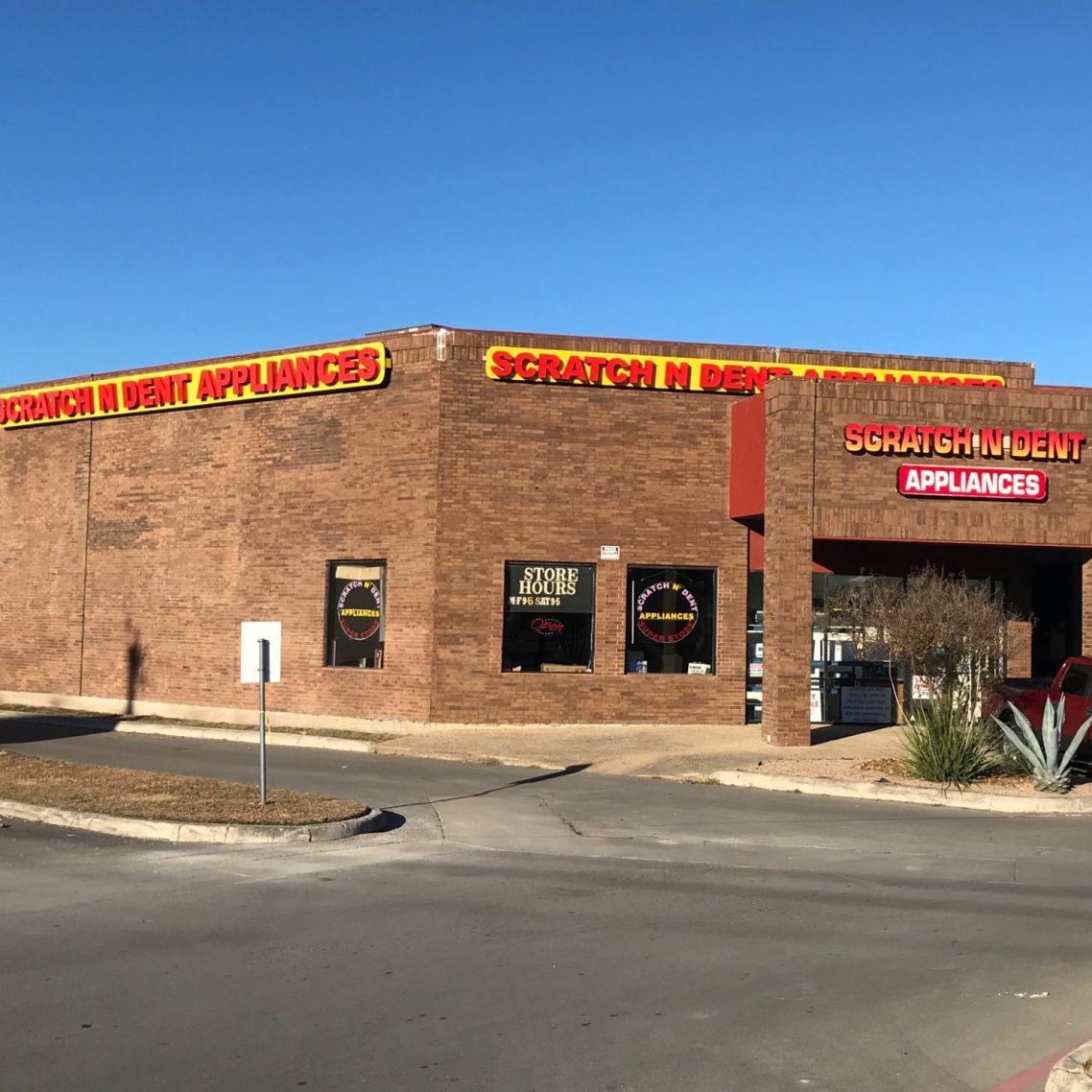
Stores like Scratch and Dent Superstore lean into this, with warehouse style setups and “blemished but new” units lined up for bargain hunters. That is the vibe we love, honest damage, honest price, clear savings.
2. Safety First: A Quick Pre-Inspection Checklist
Before you touch a single knob, you want to set yourself up so the inspection is safe for you and fair to the appliance. We like to think of this as your “pre-game” for smart bargain hunting.
Use this simple checklist every time, whether you are in a warehouse, a big-box outlet, or your own driveway after delivery. It keeps the process consistent so you do not miss anything important.
Essential Pre-Inspection Steps
- Make sure the unit is unplugged before you move it or look behind it.
- Ask a staff member to help you slide or tilt large items so you do not hurt your back.
- Have your phone ready for photos and notes so you remember every dent and label.
- Confirm you can plug it in for a quick test once your visual check is done.
- Ask about time limits, for example, 30 minutes on site or 24 hours after delivery, to report hidden damage.
This small routine saves headaches later because you can prove exactly what shape the appliance was in before you said “yes” and loaded it into your truck.
3. How To Judge Cosmetic Damage vs Real Trouble
This is where people either score huge savings or walk away from a deal they should have grabbed. Not all damage is created equal, and in 2026, with tight budgets, you want to know exactly what is “just ugly” and what is “actually risky.”
We always tell shoppers, blemishes only go skin deep, unless they hit a hinge, a seal, wiring, or a control board. Those are the danger zones that can affect safety or long term performance.
Cosmetic Damage That Is Usually Fine
- Side panel dents on fridges that do not touch door seals.
- Paint scratches on the top of a washer or dryer.
- Scuffs on the bottom drawer of a range or under a dishwasher door.
- Dented kick plates that are easy to replace later.
Red Flag Damage You Should Treat With Caution
- Cracked glass on oven doors or cooktops.
- Dents near refrigerator doors that cause them to misalign or not seal fully.
- Damage on the back panel where coolant lines or wiring run.
- Bent dryer drums or washer tubs that wobble when you spin them by hand.
A clear 5-step guide showing how to safely inspect a scratch-and-dent appliance before buying. Use these checks to avoid surprises and ensure appliance quality.
4. Step-By-Step Visual Inspection: Sides, Back, And Inside
Now we get hands on. A proper inspection follows the same path every time, so you do not forget a side or a panel in the rush of a sale.
We like to walk around the appliance in a full loop, then open every door and drawer, then check the back, then the top and bottom. Slow is smooth here, even if everyone else is rushing to grab deals.
Outside Walkaround
- Start at the front and scan from top to bottom for scrapes, dents, and gaps.
- Check the corners, those are the first spots that get crushed in shipping.
- Move down each side and gently press on large dents to see if anything feels loose inside.
- Look along the top edge for bends that might twist doors or lids.
Inside Check
- Open every door fully and make sure it swings freely without rubbing.
- Check shelves, racks, and drawers for cracks or broken clips.
- Look for rust, water stains, or signs of leaks around seals and gaskets.
- Spin drums or fans by hand where you can, they should feel smooth, not crunchy.
Back And Bottom
- Check power cords for cuts, kinks, or tape jobs.
- Look at coils, vents, and back panels for crushed spots or sharp bends.
- Make sure leveling feet are present and not broken off.


5. Plug-In Tests: How To Safely Test Key Functions
Once the visual check is done, it is time to see if this thing actually works like it should. We always ask staff to plug it in for us, and we stay nearby while it runs.
You do not need to run a full wash cycle or bake a turkey in the store, but you do want to see the basics fire up without weird noises, smells, or error codes.
Basic Power-Up Checklist
- Does the display turn on and stay on without flickering.
- Do buttons and knobs respond right away.
- Any error codes or warning lights on startup.
Quick Tests By Appliance Type
| Appliance | What To Test |
| Refrigerator | Listen to compressor start, feel for cool air after a few minutes, check interior lights and fans. |
| Washer | Run a short cycle start, make sure the drum spins smoothly and door locks properly. |
| Dryer | Check heat output, drum spin, and that the door switch turns the light on and off. |
| Range / Oven | Test each burner briefly, start the oven and feel for heat building up. |
| Dishwasher | Start a quick cycle, listen for normal spray sounds and check for leaks around the door. |
If the store refuses to let you test anything at all, that is a signal to pause and think about the risk, especially when there is no strong warranty backing you up.

6. Safety And Recall Checks You Should Never Skip
Scratches and dents are easy to see, hidden safety issues are not. In 2026, appliance recalls keep rolling, which is why we always tell shoppers to build recall checks into the inspection itself.
Appliances made it into 15 recall notices in both Q1 and Q2 2025, and that steady pace has not slowed much, so checking model and serial numbers is now just part of a smart inspection routine.
How To Check For Recalls On The Spot
- Find the rating plate or sticker with the model and serial number, usually inside the door or on the back.
- Use your phone to search the brand name, model number, and the word “recall.”
- Look at recent Consumer Product Safety Commission (CPSC) alerts for your exact model.
Pro tip: If the model was recalled for fire, shock, or overheating issues, walk away, even if the price is wild. No deal is worth a safety hazard in your kitchen or laundry room.
If you find an old recall that has a repair kit or a fix, ask the store if that work has already been done and if they have proof, like a service tag or paperwork.
7. Online Scratch And Dent Deals: How To Inspect From Your Couch
In 2026, a lot of scratch and dent hunting starts online, then moves to a local store or delivery. That means your “inspection” begins with photos, videos, and listing details long before you ever see the appliance in person.
Sites like Scratch & Dent Stores and Scratch and Dent Finder help you track down local outlets, then your real work is making sure the actual item matches the listing when you get there.
What To Ask For Before You Go See It
- Close-up photos of every dent or scratch from more than one angle.
- A photo of the rating sticker with model and serial number.
- Confirmation of remaining factory warranty or store warranty in writing.
- A simple list of what has been tested, for example, “cooling checked,” “runs quiet,” “no leaks.”
Delivery Day Inspection For Online Orders
- Inspect the box and the appliance before you sign anything.
- Take clear photos of every new dent, scrape, or crushed corner.
- If damage looks worse than advertised, refuse delivery or write it clearly on the delivery slip.
- Use any claim process offered by the seller or platform right away.
8. Warranty, Returns, And Extended Coverage: Read The Fine Print
You can do a perfect inspection and still want a safety net, and that is where warranty and return rules come in. In 2026, brands and stores treat scratch and dent units differently, so we always push shoppers to ask hard questions before they swipe their card.
Remember, 52% of major appliance buyers say they would buy the same brand again if they never had problems, and only 32% would repurchase after issues, so it is smart to think about what happens if something goes wrong.
Questions To Ask About Warranty
- Does the factory warranty still apply, and for how long.
- Does the dented or open-box status change what is covered.
- Can you buy an extended warranty on this exact unit number.
- Who handles service calls, the brand, the store, or a third party.
Return And Exchange Rules
- How many days do you have to return or exchange the unit.
- Is there a restocking fee, and how much.
- Do they offer “satisfied or return” style policies on scratch and dent stock.
- What proof of damage or failure do they need for a return.
We like video resources, such as the content linked from Scratch and Dent Finder FAQ, to help you understand when extended warranties are worth the extra cost, especially for high-tech units with extra parts that can fail.
9. Comparing Deals: When The Dent Is Worth The Discount
At the end of the day, you are trading looks for savings. A safe scratch and dent buy is one where the damage does not affect performance, and the discount fits the level of ugly you are taking home.
We like to compare three numbers side by side so the choice is clear and not emotional.
Simple Price Comparison Table
| Option | Condition | Example Price | When It Makes Sense |
| Brand-new in box | No visible damage | $1,000 | You want perfect looks, full warranty, and zero risk. |
| Scratch and dent, small side ding | Cosmetic only, not visible after install | $700–$800 | Best value when performance is tested and warranty is mostly intact. |
| Scratch and dent, big front dent | Highly visible, might affect seals or doors | $500–$600 | Only worth it if damage is proven cosmetic and you truly do not care about looks. |
The deeper the dent and the more visible it is, the steeper the discount should be. If you are staring at a badly banged-up door with only 5% off, you are not getting a real scratch and dent deal, you are just getting damage for free.
10. Brand, Model, And Feature Checks That Matter In 2026
Not all brands and models behave the same, especially when they have taken a hit. In 2026, front-load washers are known troublemakers, with 89 problems per 100 units, so they need more careful inspection than a basic top loader.
We also see more high-tech features like steam, air sanitizing, and Wi-Fi controls that look cool but mean more parts that can fail after a bump.
Brand And Model History
- Search for your exact model with words like “issues,” “problems,” or “repairs.”
- Avoid models with long lists of common failures out of the box.
- Use guides like the videos highlighted on Scratch and Dent Finder that talk about appliances to avoid in 2026.
Feature Reality Check
- Decide which features you actually use, and inspect those hardest.
- Test smart or digital features enough to be sure they at least boot and connect.
- Remember that 90% of an appliance’s lifetime energy use comes from regular operation, not standby, so focus more on how well it runs than on tiny standby savings claims.
We want you buying models that work hard and fail rarely, not just the ones with the flashiest screens that break the first time someone bumps them while moving a laundry basket.
Conclusion
Inspecting a scratch and dent appliance safely in 2026 is all about having a simple plan and sticking to it. You check the outside, test the inside, verify safety and recalls, and make sure the price lines up with the level of damage.
When you do that, those “rough exterior” bargains turn into smart wins, not surprises. We want you walking out of the warehouse or signing for delivery knowing you grabbed an unbeatable price on a top brand, with your eyes wide open and your budget still smiling.