
Gas Dryer vs. Electric: Which One Fits Your Home?
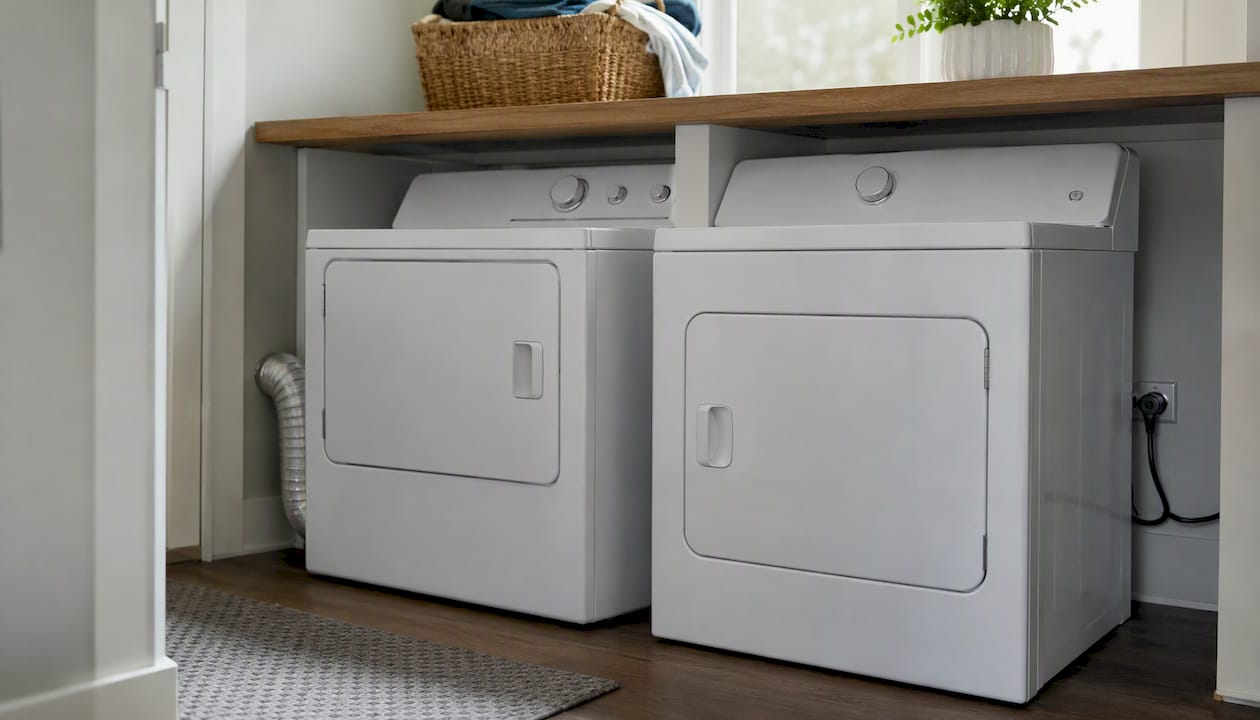
Choose based on what's already hooked up in your laundry room: if you have a gas line and vent, a gas dryer usually costs less to run over time; if you don't, an electric dryer (or a ventless heat-pump model) is the practical pick.
- Check for an existing gas line and 240V outlet before shopping.
- Compare your local $/kWh against $/therm using each unit's Combined Energy Factor (CEF) rating.
- Look for the ENERGY STAR label, especially on heat-pump electric models.
- Browse discounted washers and dryers near you once you know which fuel type you need.
Key Takeaways
Matching a new dryer's fuel type to your home's existing hookup, then comparing CEF ratings and local energy rates, determines your real cost more than any brand or feature list.
| Point | Details |
|---|---|
| Hookup decides the fuel type | Replacing like-for-like avoids the cost of adding a new gas line or 240V circuit. |
| Gas often costs less to run | Operating savings depend on local gas and electric rates, so calculate both before buying. |
| Heat-pump electric leads efficiency | These ventless models often beat standard gas dryers on total energy use per cycle. |
| Vent cleaning is non-negotiable | Clogged vents are a leading cause of dryer-related house fires in either fuel type. |
| Buy discounted through an organized directory | Scratchanddentstores lists local scratch-and-dent gas and electric dryers with inspection and return details. |
Table of Contents
- Gas Vs Electric Dryer: Pros and Cons at a Glance
- How Do Gas and Electric Dryers Make Heat?
- Which Costs More: Purchase Price or Running Costs?
- Does Gas or Electric Dry Clothes Faster?
- What Installation and Safety Rules Apply to Each Type?
- Which Dryer Type Has a Smaller Environmental Footprint?
- How Long Do Gas and Electric Dryers Last?
- What Should You Check Before Buying a Dryer?
- Where to Find Discounted Gas and Electric Dryers
- Publisher's Take: Let Your Hookup Decide First
- Find Your Next Dryer for Less
- Sources
Gas Vs Electric Dryer: Pros and Cons at a Glance
Matching your new dryer to your existing hookup is the single decision that saves the most money and hassle, according to Whirlpool's comparison guide. Here's how the two stack up on the factors that actually matter.
Gas dryer pros:
- Often lower operating cost over time, depending on local utility rates
- Heats up faster, which can shorten total drying time
Gas dryer cons:
- Requires a dedicated gas line and professional installation
- Higher upfront setup cost if no gas hookup exists
Electric dryer pros:
- Lower purchase price on average
- Easier DIY installation if a 240V outlet is already there
Electric dryer cons:
- Typically higher long-term operating cost in many markets
- Standard models trail gas on raw drying speed
Heat-pump electric dryers and ventless units complicate this picture. They skip the exterior vent entirely and, per Samsung's buying guide, often beat conventional gas models on total energy use.
How Do Gas and Electric Dryers Make Heat?
Both dryer types spin a drum and blow hot air through wet clothes. Where they differ is the heat source itself.
- Gas dryers burn natural gas or propane in a small burner assembly, then use a blower to push that heat through the drum.
- Conventional electric dryers run current through a heating element, similar to a toaster coil, to warm the air.
- Heat-pump electric dryers work differently. Instead of generating new heat, they recycle warm air through a refrigerant loop, according to Samsung.
Most gas and standard electric models vent hot, moist air outside through a duct. Heat-pump and other ventless dryers condense that moisture into a drain or reservoir instead, which is why they can go in spaces without exterior venting. That heat source is exactly why installation requirements, drying speed, and running costs diverge so much between the two types.
Which Costs More: Purchase Price or Running Costs?
Electric dryers usually win on the price tag. Gas dryers usually win on the utility bill, if you already have the hookup. The real comparison isn't the sticker price. It's total cost of ownership: what you pay to buy it, install it, and run it for years.
Steps to estimate your real cost:
- Check your utility bills for your $/kWh electric rate and $/therm (or per ccf) gas rate.
- Look up each model's CEF rating. Higher CEF means fewer therms or kilowatt-hours per load.
- Estimate your weekly loads and multiply by each unit's rated energy use per cycle.
- Add installation: a gas line and vent run typically cost more upfront than adding a 240V circuit, especially if neither currently exists.
- Compare the five-year total, not just the price tag.
Installation is where budgets get surprised. Home Depot notes that electric dryers are often DIY-friendly if the 240V outlet already exists, while gas dryers need a professional for the gas line, plus a 120V outlet for the control panel.
Two rules keep costs down regardless of fuel type:
- Replace like-for-like (gas for gas, electric for electric) whenever possible to avoid new-line installation costs, a point Family Handyman makes repeatedly.
- Run the CEF and local rate math before you buy. A gas dryer's lower operating cost, per Whirlpool, depends heavily on your specific fuel prices, not a national average.
Does Gas or Electric Dry Clothes Faster?
Gas dryers tend to heat up faster, which often trims total drying time and reduces how long fabric sits in a hot drum, according to The Spruce. Heat-pump electric dryers run cooler and slower, but that gentler cycle can mean less wear on delicate fabric over the life of the dryer.
Features that affect fabric care matter more than fuel type in day-to-day use:
- Moisture sensors that stop the cycle once clothes are actually dry, not just at a fixed timer
- Steam cycles for wrinkle release and light refreshing
- Reversible airflow or damp-dry alerts on higher-end models
- Multiple heat settings for delicates versus towels or denim
Pro Tip: Run a lower-heat, sensor-based cycle for synthetics and activewear. It cuts static and shrinkage regardless of whether your dryer runs on gas or electricity.
What Installation and Safety Rules Apply to Each Type?
Gas dryers need a dedicated gas line, a standard 120V outlet for the electronic controls, and a vent to the exterior, and they require professional installation for both safety and code compliance, per Home Depot. Electric dryers need a 240V circuit, with ventless heat-pump models as the main exception since they don't require exterior ducting at all.
Safety basics that apply either way:
- Install a carbon monoxide detector near any gas appliance, including your dryer.
- Use rigid or semi-rigid metal venting instead of flexible plastic or foil duct, which restricts airflow and can trap lint.
- Clean the vent duct at least once a year. Clogged vents are a leading cause of dryer-related house fires, according to Home Depot.
- Have a professional check gas connections for leaks at installation and periodically afterward.
Pro Tip: When you call a plumber or electrician for installation, ask two questions directly: does this comply with local code, and do I need a permit for this hookup?
Which Dryer Type Has a Smaller Environmental Footprint?
Electric dryers running on a clean local grid, or heat-pump electric models specifically, generally carry the smallest carbon footprint of the bunch. Gas dryers burn fuel onsite, which cuts electricity demand but adds direct combustion emissions at your house instead of at a power plant.
- Your utility's grid mix matters. A dryer plugged into mostly renewable or nuclear power looks very different, emissions-wise, than one on a coal-heavy grid.
- Heat-pump dryers are the clear efficiency leaders among electric models, according to Samsung's buying guide, and often beat standard gas units on total energy use.
- ENERGY STAR certification is the fastest way to screen for efficient models in either fuel category.
If environmental impact ranks high on your list, check your utility's published emissions intensity before assuming electric automatically wins.
How Long Do Gas and Electric Dryers Last?
Well-maintained dryers of either type last roughly the same number of years. The maintenance itself just looks different. Gas dryers need a periodic professional check of the gas hookup and venting, while electric dryers are generally simpler for homeowners to troubleshoot and repair themselves.
- Clean the lint filter after every load, no exceptions.
- Clear the vent duct annually to maintain airflow and reduce fire risk.
- Schedule a yearly inspection of the gas line and connection fittings if you own a gas dryer.
- Check the condensate drain or reservoir on heat-pump models regularly.
Leave gas-line repairs and any burner issues to a licensed technician. Electric dryer problems like a worn belt or faulty thermostat are often manageable as DIY fixes.
What Should You Check Before Buying a Dryer?
A little homework before you buy prevents most installation headaches and post-purchase regret.
- Confirm your hookup type (gas line or 240V outlet) before falling in love with a specific model.
- Measure door and closet clearances, including venting path length.
- Check the ENERGY STAR label and CEF rating side by side with the price tag.
- Review the warranty terms, especially on any open-box or discounted unit.
Ask the seller or installer pointed questions: is the gas flex-line new, what material is the vent duct, what will installation actually cost, and what's the return window if something's wrong?
If you're eyeing a scratch-and-dent unit, add a few more checks: confirm the damage is cosmetic and not functional, ask about the return window, and inspect for signs of prior water damage or a blocked vent port. Scratchanddentstores' inspection guide for damaged-box appliances walks through exactly what separates a cosmetic dent from a real functional risk.
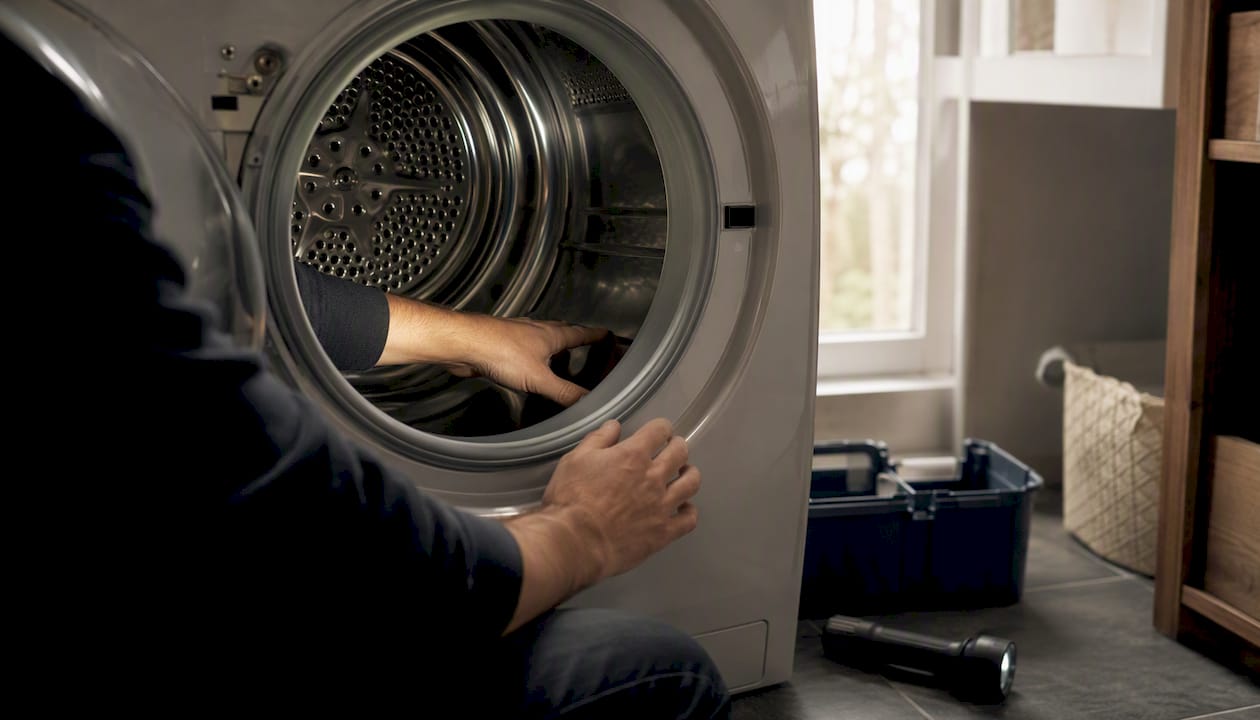
Pro Tip: Ask to plug the dryer in and run a short test cycle in-store. A drum that rattles, thumps, or grinds during a five-minute test almost always signals a mechanical issue, not just cosmetic wear.
Where to Find Discounted Gas and Electric Dryers
Once you know which fuel type fits your home, the fastest way to save real money is buying a unit with cosmetic damage instead of a flawless one. Scratchanddentstores maintains a state-by-state directory of local outlets carrying open-box and scratch-and-dent washers and dryers, both gas and electric.
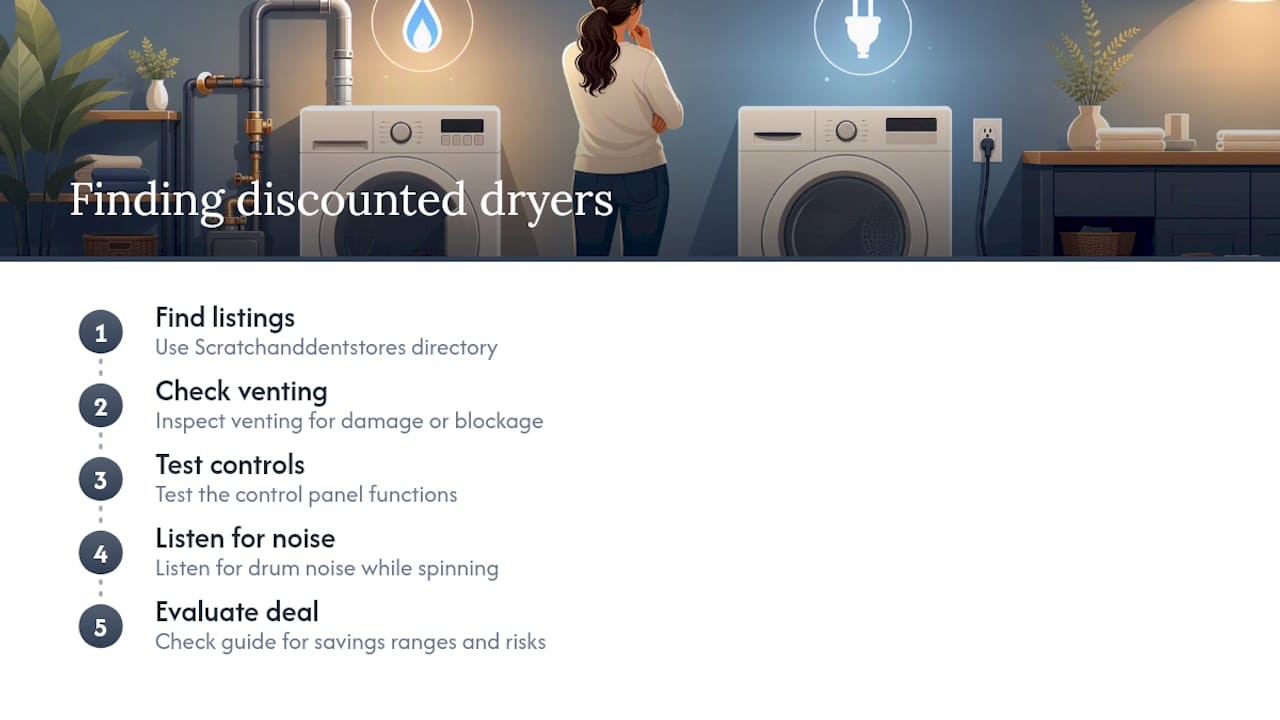
Before you visit any store or listing, check the venting condition, test the control panel, and listen for drum noise. Those three checks catch most functional problems that a photo online won't show. Scratchanddentstores' guide to laundry appliance deals breaks down typical savings ranges and what separates a good deal from a risky one.
Publisher's Take: Let Your Hookup Decide First
We built Scratchanddentstores to help budget-conscious homeowners find real appliance savings, and the biggest mistake we see is people falling for a fuel type before checking what their laundry room can actually support. Match your hookup first, then shop the directory for a discounted unit that fits it.
Find Your Next Dryer for Less
A brand-new gas or electric dryer at full retail price often carries the same core components as one with a small dent or an open box, just at a markup you don't need to pay. Scratchanddentstores exists to close that gap: search by state and appliance type, filter for the fuel type your home already supports, and check each listing's inspection notes and return policy before you commit.

Start by browsing scratch-and-dent washers and dryers near you, narrow results to your gas or electric hookup, and compare listed savings against new retail pricing. If you want the full inspection rundown first, the scratch-and-dent buying guide on the blog covers exactly what to check before you pay.
Sources
- Gas vs. Electric Dryers | The Home Depot
- Gas vs. electric dryers: what’s the difference? | Whirlpool
- Gas vs. Electric Dryers | Samsung Buying Guide
- Gas Dryer vs. Electric Dryer | The Spruce
- Gas vs. Electric Dryers: How To Choose Which Is Right For You | Family Handyman