
Appliance Outlet Stores Guide: Where to Save the Most
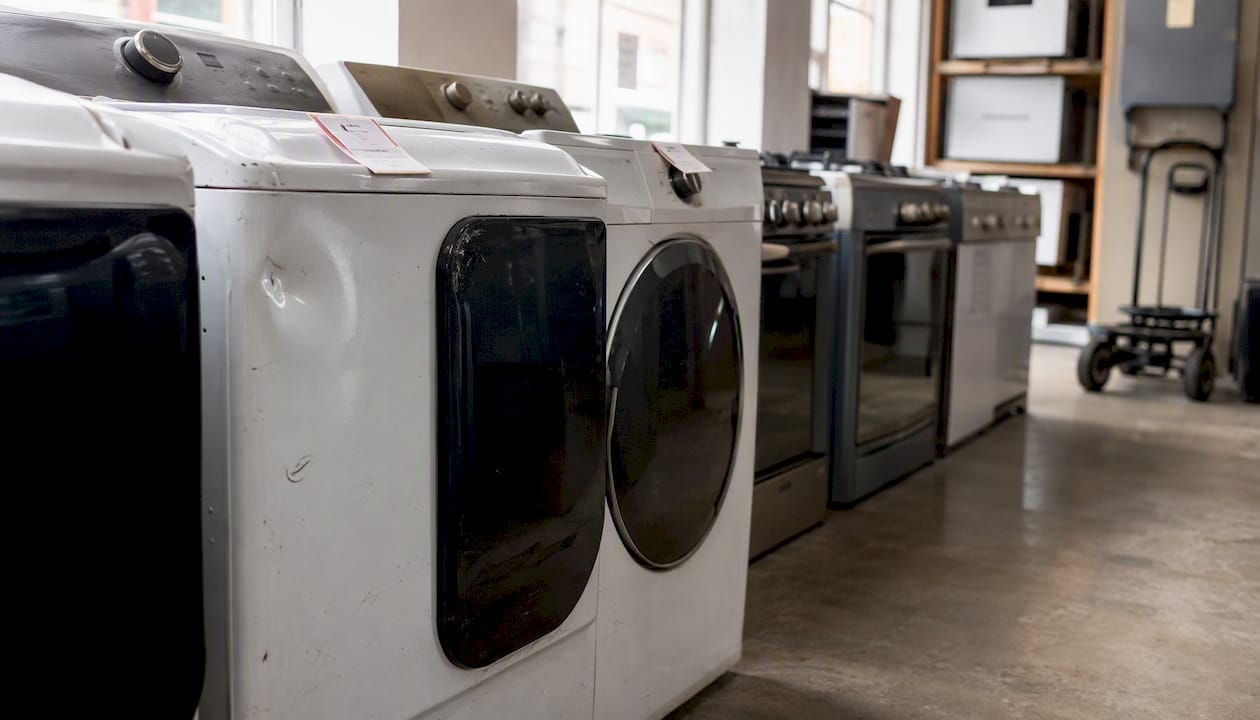
Appliance outlet stores are worth it for most budget-conscious shoppers, as long as you can live with a scuff on a side panel and you confirm the warranty before you pay. Discounts commonly land in the 50 to 70 percent range off retail on open-box, floor-model, and scratch-and-dent units, and you can cut running costs further by choosing models rated by ENERGY STAR. The fastest path to a real deal is a state-by-state directory like Scratchanddentstores.com, followed by a phone call to the store before you drive over. Outlet inventory moves fast, and a five-minute call can save you a wasted afternoon.
Here's what that quick verdict looks like in practice:
- Set your budget around outlet pricing, not retail sticker prices, since a $1,800 refrigerator can realistically show up at $700 to $900.
- Use Energy Star ratings as your tiebreaker when two similar units are priced close together.
- Search an organized directory first, shortlist two or three stores, and call ahead to confirm the exact unit is still on the floor.
- Ask about warranty coverage and delivery fees before you commit, not after.
Key Takeaways
Outlet shopping saves the most money when you combine an organized directory search with a hands-on inspection and a clear warranty conversation before you pay.
| Point | Details |
|---|---|
| Call before you drive | Outlet inventory moves within hours, so confirm the exact unit is still available before visiting. |
| Check Energy Star ratings | Compare operating costs between similar discounted models to avoid a false bargain. |
| Inspect function, not just looks | Run every cycle and setting to separate cosmetic damage from real functional risk. |
| Total up the real cost | Add delivery, installation, and haul-away fees before comparing outlet prices to retail. |
| Use an organized directory | Scratchanddentstores.com lists local outlets by state and appliance type so you can shortlist stores before calling. |
Table of Contents
- What Is an Appliance Outlet Stores Guide Actually Helping You Do?
- The Outlet Landscape: Types of Appliance Outlets and Who Sells What
- What You'll Actually Find at Outlets and Realistic Savings to Expect
- How Outlet Inventory Is Created and the Condition Grades You'll See
- Inspection Checklist: What to Check Before You Buy
- Delivery, Installation, Removal, and Warranty: The Real Cost of Ownership
- Timing and Promotion Strategies to Maximize Outlet Savings
- How to Choose Which Outlet to Trust
- Using an organized directory to Speed Up Your Search
- Find Verified Outlet Deals Faster With Scratchanddentstores
- Frequently Asked Questions
- Sources
What Is an Appliance Outlet Stores Guide Actually Helping You Do?
An appliance outlet stores guide exists to solve one problem: retail appliance prices have climbed to the point where a mid-range refrigerator, washer, or range can eat a serious chunk of a household budget. Outlet shopping flips that math by selling functionally identical appliances at a steep markdown because of a dent, a canceled order, a floor display, or overstock nobody wants to keep paying rent on. The "guide" part matters because outlet inventory doesn't behave like retail inventory. It's unpredictable, regional, and often invisible unless you know exactly where to look.
That's the gap this guide closes. You'll learn the different flavors of appliance outlets, what condition grades actually mean, how to inspect a unit before you pay, and how to use a directory to stop guessing and start calling the right stores first.
The Outlet Landscape: Types of Appliance Outlets and Who Sells What
Not every outlet is the same animal, and knowing the difference changes where you should be shopping. An industry guide to appliance outlets breaks the category into a few recognizable buckets, and each one carries its own trade-offs on price, selection, and how much hand-holding you get if something goes wrong.
- Manufacturer outlets. These sell overstock, discontinued models, and factory seconds directly from the brand, often at the deepest discounts on brand-new units with minor packaging or cosmetic issues.
- Big-box outlet or clearance sections. Stores like Lowe's and Home Depot run dedicated clearance areas for floor models and discontinued inventory, while Best Buy has an open-box program that covers returned or display units with reduced warranty windows.
- Independent scratch-and-dent dealers. Local, often family-run outlets that source appliances with cosmetic damage from freight, warehouse handling, or retailer returns. These tend to have the widest range of condition and price.
- Online outlet and liquidation platforms. Sites that list overstock and returned units for shipping, useful for niche models but harder to inspect before purchase.
Comparing outlet types
| Outlet type | Typical price advantage | Selection breadth | Warranty likelihood | Delivery/installation |
|---|---|---|---|---|
| Manufacturer outlet | High (near-new stock) | Narrow, brand-specific | Often full manufacturer warranty | Rarely included |
| Big-box clearance/open-box | Moderate to high | Wide, multiple brands | Reduced or shortened warranty | Sometimes available, added fee |
| Independent scratch & dent | High to very high | Wide, mixed condition | Varies by store, often 90 days to 1 year | Frequently offered locally |
| Online liquidation | High | Narrow per listing | Limited, buyer beware | Shipping only, no install |
If you want a specific brand and don't mind chasing it, a manufacturer outlet is worth the drive. If you want the widest selection and the best shot at local delivery, independent scratch-and-dent stores usually win. Big-box open-box sections are the easiest entry point if you've never bought outlet before, since return policies tend to be more familiar.
What You'll Actually Find at Outlets and Realistic Savings to Expect
Outlets aren't a random grab bag. The categories that show up most often are refrigerators, ranges and ovens, washers and dryers, dishwashers, freezers, and countertop microwaves, largely because these are the appliances with the highest return and overstock rates at big retailers. High-end refrigerators in particular land in outlets more often than shoppers expect, usually because of freight damage or a canceled custom order rather than any real defect.
- Refrigerators and freezers: frequent flyers in scratch-and-dent inventory due to shipping damage on doors and panels.
- Ranges, cooktops, and wall ovens: often floor models pulled after a showroom refresh.
- Washers and dryers: commonly open-box returns or discontinued color/finish runs.
- Dishwashers: smaller footprint means lower shipping damage but steady overstock turnover.
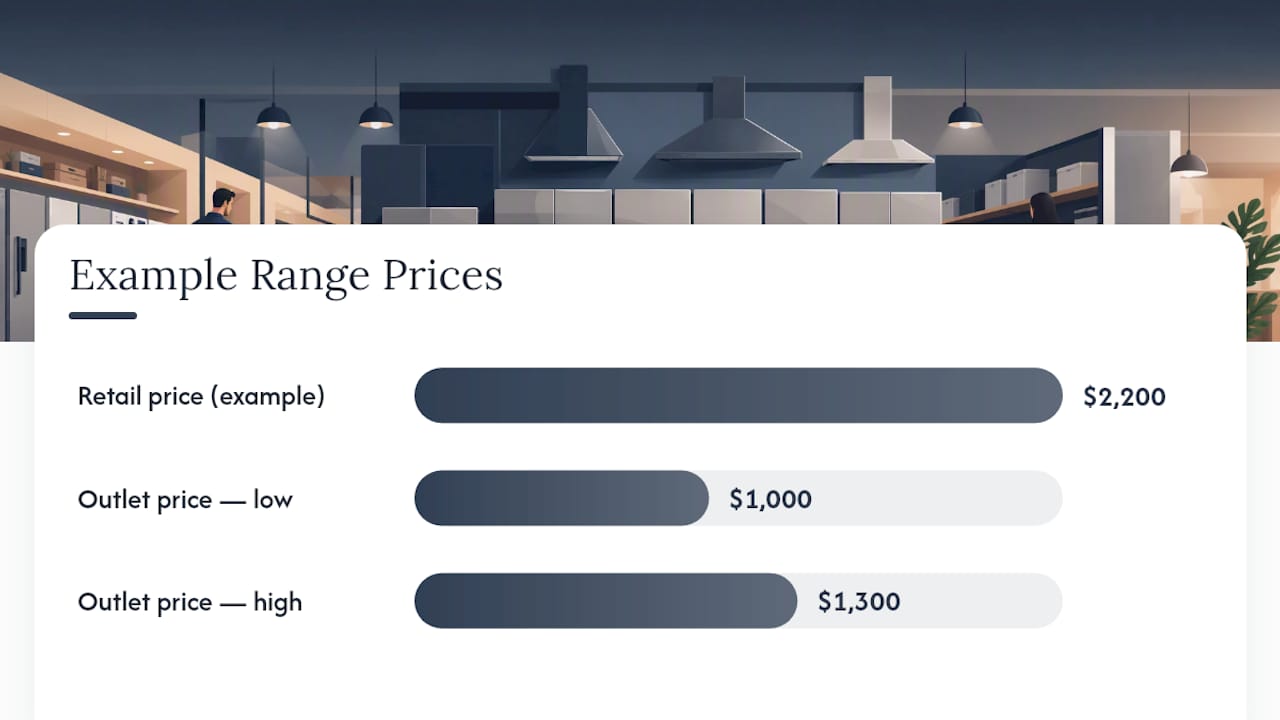
Realistic savings, by the numbers: HouseDigest reports that outlet and clearance purchases can reach 50 percent or more off retail, and independent regional outlets regularly advertise up to 50 to 70 percent off on scratch-and-dent and open-box units. A $2,200 stainless steel range that would normally strain a renovation budget can realistically land closer to $1,000 to $1,300 with a small dent on the back panel nobody will ever see once it's installed.
Don't stop at the sticker price, though. Two units priced identically can have very different five-year running costs. Checking ENERGY STAR ratings before you buy tells you which model saves more on electricity and water over its lifespan, which sometimes closes the gap between a cheaper, older design and a slightly pricier, more efficient one.
How Outlet Inventory Is Created and the Condition Grades You'll See
Every outlet appliance has a backstory, and understanding it helps you separate a genuine bargain from a future headache. An outlet guide to appliance shopping lays out the common paths units take to get there: overstock from a canceled bulk order, discontinued color or model runs, floor samples retired after a showroom refresh, customer returns, freight damage, and manufacturer refurbishing after a repair.
Here's what the condition labels actually mean in practice:
- Open-box: Previously purchased and returned, often unused or barely used, typically with original packaging missing.
- Floor model: Displayed in a showroom, may show minor wear, usually functions fully.
- Scratch-and-dent: Cosmetic damage from shipping or handling, no functional impact in most cases.
- Refurbished: Repaired after a defect or return, tested and often re-certified by the manufacturer or retailer.
- Clearance/discontinued: Fully functional, just being phased out to make room for new models.
Retailers and independent outlets price these tiers differently. A scratch-and-dent unit with cosmetic-only damage might only drop 20 to 30 percent, while a refurbished unit with a documented repair history might drop further to offset buyer hesitation. Big-box open-box programs, including Best Buy's, typically grade condition on a visible scale (like new, moderate wear) and price accordingly.
Pro Tip: Read the actual condition note, not just the tier label. "Minor scuff on left panel, fully tested" tells you far more than "scratch and dent," and a store that writes detailed notes is usually a store that inspects its inventory carefully.
Inspection Checklist: What to Check Before You Buy
This is where outlet shopping either pays off or turns into a costly mistake. A little diligence at the store, or a few sharp questions online, protects you from buying someone else's functional problem disguised as a cosmetic one.
In-store checklist:
- Visually inspect all sides, not just the front, including the back panel and underside where damage often hides.
- Ask the salesperson to plug it in and run it if it's not already running on the floor.
- Check the door seals on refrigerators and dishwashers for gaps or tears.
- Verify the model and serial number match the listed price and any online research you've done.
- Open every drawer, bin, and shelf to confirm nothing is cracked or missing.
Questions to ask before you pay:
- What's the warranty, and does it come from the manufacturer or the store itself?
- What's the return policy if it fails within the first week?
- Is there a documented repair history on this unit?
- What does delivery and installation cost, and is it available at all?
For online listings, request close-up photos of every visible surface, not just the marketing shot, and ask directly whether the damage is purely cosmetic or if any function was affected during shipping.
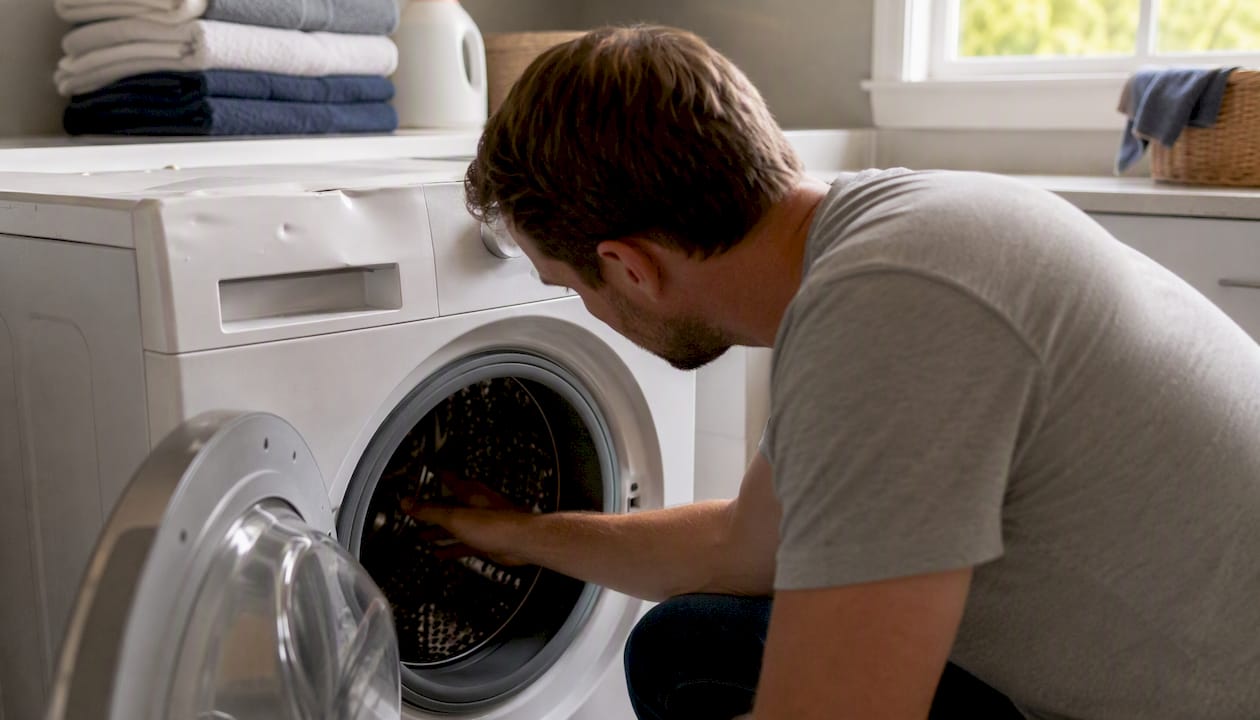
Pro Tip: A quick way to separate cosmetic issues from functional risk: run every cycle or setting once. A washer that spins evenly through a full cycle with a dented top panel is a cosmetic buy. A washer that hesitates, leaks, or throws an error code is a functional risk no discount is worth.
Delivery, Installation, Removal, and Warranty: The Real Cost of Ownership
The sticker price at an outlet is never the whole story. Delivery and installation fees, old-unit removal, and warranty gaps can quietly eat into your savings if you don't account for them upfront.
Delivery and installation availability varies widely by outlet type. Independent scratch-and-dent stores frequently partner with local delivery and installation crews, sometimes bundling the fee into a package price, as seen with outlets like Utah Discount Appliance Warehouse, which promotes manufacturer warranty coverage alongside delivery partnerships. Big-box clearance sections usually charge standard delivery fees similar to full-price purchases, and manufacturer outlets often skip delivery altogether, expecting you to arrange your own transport or freight service.
- Ask whether delivery includes basic installation (hookup, leveling) or just drop-off at the curb.
- Confirm whether removal of your old appliance is included or billed separately, since many municipalities also charge recycling fees for major appliances.
- Clarify warranty terms in writing: full manufacturer warranty, a shortened store warranty, or "as-is, no warranty."
- Factor in a repair buffer for scratch-and-dent units bought without warranty coverage, especially on major components like compressors or motors.
A unit priced $400 cheaper than a competitor isn't actually cheaper if it comes with a $150 delivery fee, a $75 haul-away charge, and zero warranty versus a competitor's free delivery and 90-day coverage. Do the full math before you decide.
Timing and Promotion Strategies to Maximize Outlet Savings
When you shop matters almost as much as where you shop. Outlet pricing already runs deep, but stacking it against the right calendar window can push your savings even further.
Retailers tend to refresh clearance and floor-model inventory around major sales windows, including Memorial Day, Black Friday, mid-summer clearance pushes (when new model years start arriving), and the last weeks of December as stores clear space for January inventory. Timing a purchase around one of these windows can compound outlet pricing with additional seasonal markdowns, since outlets sometimes layer an extra promotional discount on top of an already-reduced scratch-and-dent price.
- Sign up for local store email or text alerts if the outlet offers subscriber previews of new inventory.
- Check store websites or call weekly during high-turnover seasons like spring, when new appliance lines push older stock into clearance.
- Ask financing questions at big-box outlets, since some open-box programs still qualify for standard financing plans even on discounted units.
Pro Tip: Outlet inventory turns over in hours, not days, at popular stores. If you see a strong deal listed online, call immediately and ask the salesperson to hold it, since waiting even a day can mean it's already sold by the time you show up.
How to Choose Which Outlet to Trust
With dozens of outlet options in any metro area, picking the right one comes down to a short trust checklist rather than chasing the single lowest price you can find.
- Inventory transparency: Does the store list detailed condition notes, or just a generic "scratch and dent" tag with no explanation?
- Warranty clarity: Will they put the warranty terms in writing before you pay, not just tell you verbally?
- Customer reviews: Look for consistent mentions of accurate condition descriptions and honest delivery timelines, not just low prices.
- Delivery radius and return policy: Confirm both cover your address and your comfort level with risk.
Red flags worth walking away from include a store that refuses to let you plug in or test a unit, vague answers about repair history, no written return policy, and pressure to buy immediately without time to inspect. A store confident in its inventory will let you look closely and ask questions without pushback.
Weigh the lowest price against the strength of the guarantee behind it. A unit that's $50 cheaper with no warranty and no delivery option is rarely the better deal once you account for the risk of a hidden defect.
Using an organized directory to Speed Up Your Search
Driving from outlet to outlet hoping to stumble onto a deal wastes gas and time you don't need to spend. A verified, state-by-state directory does the legwork of confirming which stores actually exist, what they carry, and what services they offer, similar to how ScratchAndDentGuide.com's directory tracks over 728 stores nationwide.
Here's a workflow that actually works:
- Search by appliance type (refrigerators, washers and dryers, freezers) to filter out irrelevant listings.
- Filter by distance and check which listed stores offer delivery or installation services.
- Shortlist two or three stores with the strongest inventory notes and reviews.
- Call each one using the inspection questions above before you drive anywhere.
This approach saves you from the classic outlet-shopping mistake: showing up to a store whose best inventory sold that morning. It also improves your negotiating position, since you walk in already knowing what similar units cost at competing outlets nearby.
A publisher's take on outlet shopping
Most advice about buying appliances treats cosmetic damage like it's a red flag instead of what it usually is: irrelevant. A dent on the side of a refrigerator that sits flush against a cabinet wall costs you nothing in daily use, yet it can knock hundreds of dollars off the price simply because most shoppers won't look past it. That gap between perception and function is where the real savings live, and it's the single biggest thing budget shoppers misunderstand about outlet stores.
The bigger mistake isn't buying scratch-and-dent, it's buying blind. Skipping the warranty conversation, skipping the plug-in test, or assuming an online listing is still available all turn a smart purchase into a gamble. A directory narrows the search, but the checklist is what actually protects your money. Treat outlet shopping as a discipline, not a discount hunt, and the savings hold up long after the appliance is installed.
Find Verified Outlet Deals Faster With Scratchanddentstores
Big-box clearance racks and manufacturer outlets are worth checking, but they only cover a slice of what's out there, and neither one tells you which independent scratch-and-dent store near you actually has inventory today. Scratchanddentstores is built specifically to close that gap: a state-by-state directory of local outlets, searchable by appliance type, so you're not guessing which store to call first.
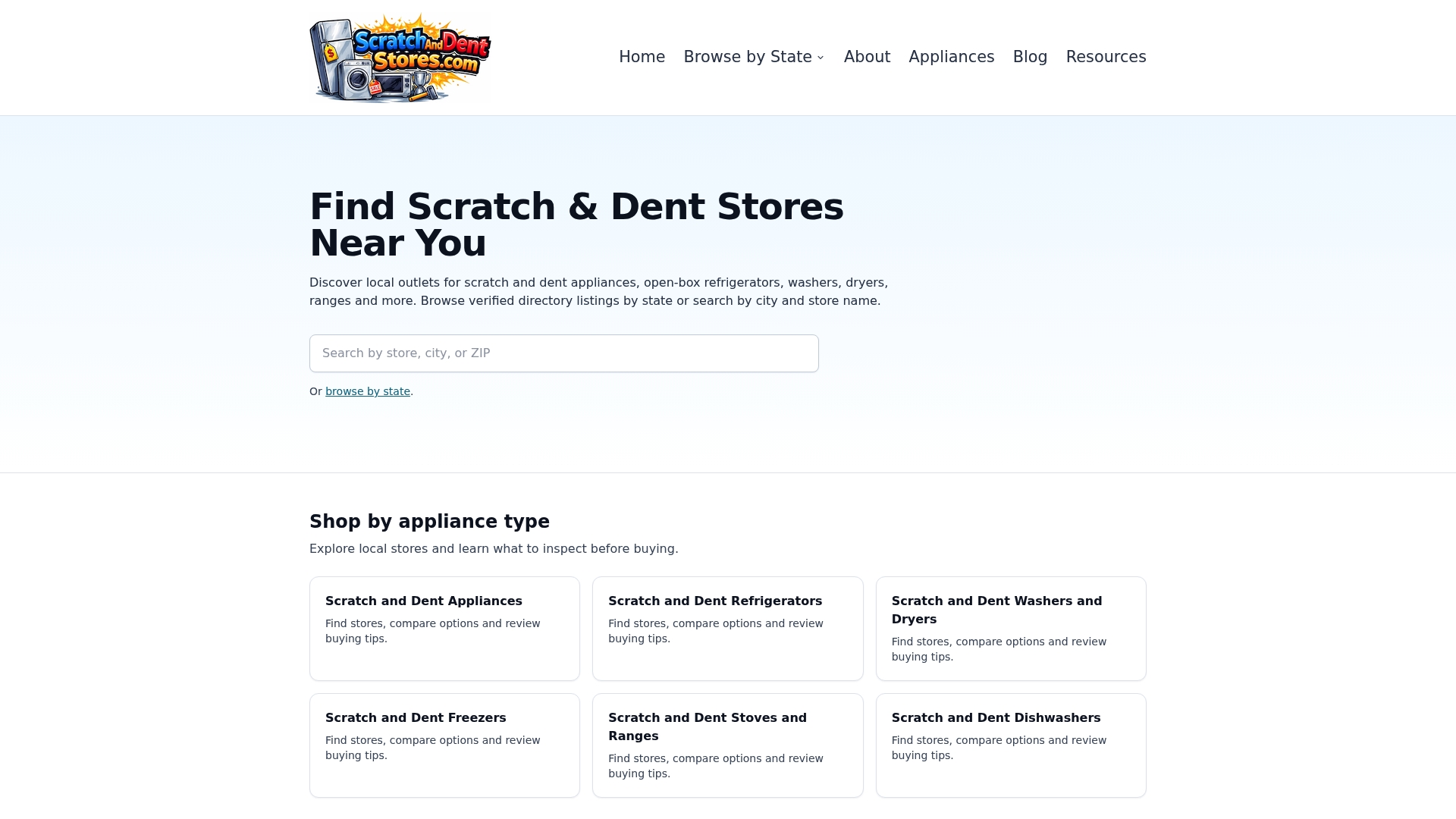
The directory is free for shoppers to use, and listed stores should be contacted directly to confirm current inventory, pricing, warranty coverage, and services. What you get in return is a organized list of local outlets, category pages for refrigerators, washers and dryers, and freezers, plus buying guides that go deeper into inspection steps than any single store's website will. If you're ready to stop guessing which local outlet is worth the drive, search Scratchanddentstores by your state and start with the two or three stores closest to you.
Frequently Asked Questions
Are appliance outlet stores actually cheaper than retail? Yes, typically. Outlet units commonly sell at 50 to 70 percent below retail because of cosmetic damage, discontinued styling, or open-box status rather than functional defects.
Do outlet appliances come with a warranty? It depends on the outlet. Some independent scratch-and-dent stores still honor full manufacturer warranties, while others offer a shortened store warranty or sell units as-is. Always ask before you pay.
How do I find scratch-and-dent stores near me? an organized directory is the fastest route, since it lists confirmed stores by state and appliance category instead of relying on scattered search results. Calling ahead to confirm current inventory is still worth doing every time.
Is buying refurbished the same as buying scratch-and-dent? No. Refurbished units have had a repair or defect addressed and are typically re-tested, while scratch-and-dent units usually have cosmetic-only damage with no functional issue at all.
What's the best time of year to shop appliance outlets? Major sales windows like Memorial Day, Black Friday, and late December, when stores clear space for new model years, tend to stack outlet pricing with extra promotional discounts.
Sources
Recommended
- Top 10 Appliance Liquidation Centers That Can Cut Your Costs In Half In 2026 | Blog | Scratch & Dent Stores
- Blog | Scratch & Dent Stores | Scratch & Dent Stores
- Where To Buy Cheap Open Box Appliances In 2026: 11 Best Places Most Shoppers Miss | Blog | Scratch & Dent Stores
- Scratch and Dent Appliances Near You | Scratch & Dent Stores